
- Your cart is empty
- Continue Shopping

Why Isn’t Sildenafil Working? 10 Common Reasons
- Meds
- Posted on
-
by main1admin
- 0 comments
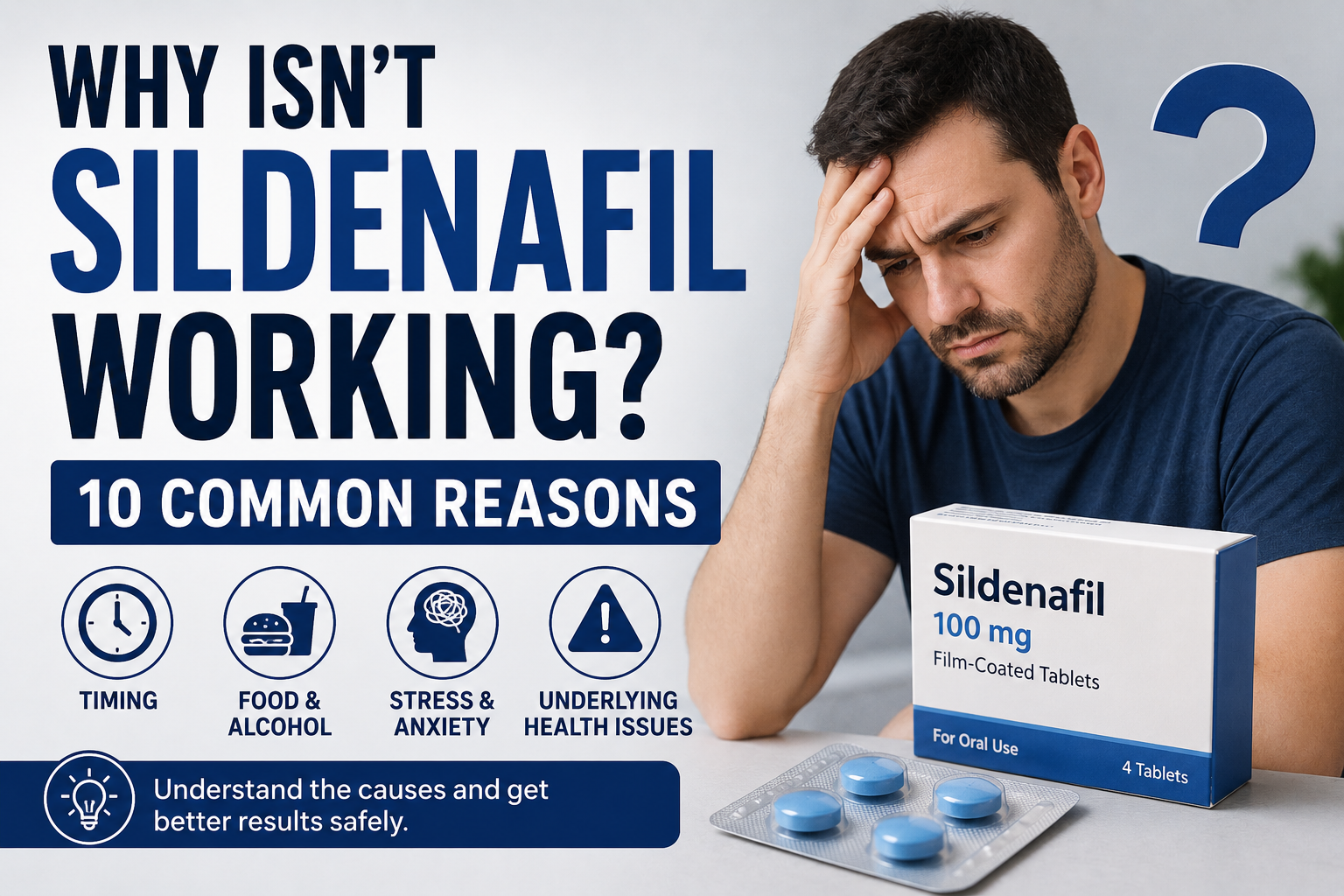
Sildenafil is one of the most effective treatments for erectile dysfunction (ED), helping millions of men achieve and maintain an erection suitable for sexual activity. However, not everyone gets the results they expect the first time they take it. Some men find that it works inconsistently, while others feel it doesn’t work at all.
If you’ve been wondering, “Why isn’t sildenafil working?”, you’re not alone. The good news is that in many cases, the problem isn’t the medication itself. Factors such as timing, food, alcohol, dosage, or underlying health conditions can all affect how well sildenafil works.
Let’s explore the ten most common reasons sildenafil may not be working and what you can do about them.
1. You Didn’t Allow Enough Time for It to Work
One of the biggest misconceptions is that sildenafil works instantly.
In reality, it usually takes 30 to 60 minutes to begin working, although this can vary from person to person. Some men may notice effects sooner, while others may need a little longer.
For best results, take sildenafil with enough time before sexual activity rather than expecting immediate effects.
2. You Took It After a Heavy Meal
A large meal, especially one high in fat, can slow the absorption of sildenafil.
This doesn’t necessarily mean the medication won’t work, but it may:
- Take longer to become effective.
- Produce weaker results.
- Delay the onset by an hour or more.
Whenever possible, sildenafil is best taken on a relatively empty stomach or after a light meal.
3. You’re Not Sexually Aroused
Sildenafil is often misunderstood.
It does not automatically cause an erection. Instead, it enhances the body’s natural response to sexual stimulation by increasing blood flow to the penis.
Without sexual arousal, sildenafil is unlikely to produce an erection.
4. The Dose May Not Be Right for You
Not every man responds equally to the same dose.
Sildenafil is commonly available in different strengths, including:
- 25 mg
- 50 mg
- 100 mg
- Higher-strength alternatives such as CenForce 150 mg and CenForce 200 mg may also be prescribed in certain situations under medical supervision.
If your current dose isn’t providing satisfactory results, your healthcare provider may recommend adjusting it. Never increase your dosage without professional advice.
5. Alcohol Is Reducing Its Effectiveness
Drinking a small amount of alcohol is unlikely to completely prevent sildenafil from working.
However, excessive alcohol can:
- Make it harder to achieve an erection.
- Lower blood pressure.
- Increase dizziness.
- Reduce overall sexual performance.
If you’re planning to use sildenafil, limiting alcohol often leads to better results.
6. Your Erectile Dysfunction Has an Underlying Medical Cause
Sildenafil treats the symptom of erectile dysfunction, but it doesn’t cure the underlying cause.
Conditions that can contribute to ED include:
- Diabetes
- High blood pressure
- Heart disease
- High cholesterol
- Hormonal imbalances
- Obesity
If these conditions are not well controlled, sildenafil may become less effective over time.
7. Stress, Anxiety, or Performance Pressure
Mental health plays a much bigger role in sexual function than many people realize.
Even when sildenafil improves blood flow, factors such as:
- Stress
- Anxiety
- Depression
- Relationship problems
- Fear of sexual failure
can interfere with the brain’s ability to trigger an erection.
For some men, addressing emotional wellbeing significantly improves treatment success.
8. You’re Taking Medications That Interfere
Certain medications may affect erectile function or interact with sildenafil.
Examples include:
- Some antidepressants
- Certain blood pressure medications
- Some prostate medications
- Other medicines that affect circulation
Always tell your healthcare provider about every medication and supplement you take before using sildenafil.
9. You Haven’t Tried It Enough Times
Many men expect perfect results after taking sildenafil once.
However, healthcare professionals often recommend trying it several times before deciding it doesn’t work. Factors such as stress, timing, meals, and unfamiliarity with the medication can all influence the first few experiences.
If you’ve only tried sildenafil once or twice, it may be worth giving it another chance while following the usage instructions carefully.
10. You May Need a Different ED Treatment
Sildenafil works well for many men, but it isn’t the best option for everyone.
If sildenafil continues to be ineffective despite proper use, your healthcare provider may recommend:
- Trying another PDE5 inhibitor.
- Adjusting your dose.
- Investigating underlying medical conditions.
- Considering alternative ED treatments.
Finding the most suitable treatment sometimes requires a personalized approach.
How to Make Sildenafil Work Better
To improve your chances of success:
- Take it 30 to 60 minutes before sexual activity.
- Avoid heavy, fatty meals beforehand.
- Limit alcohol consumption.
- Make sure sexual stimulation is present.
- Follow the prescribed dose.
- Manage chronic health conditions.
- Maintain a healthy weight.
- Exercise regularly.
- Get enough sleep.
- Reduce stress whenever possible.
These lifestyle habits can improve both erectile function and overall health.
When Should You See a Doctor?
Speak with your healthcare provider if:
- Sildenafil never works despite taking it correctly.
- It has suddenly stopped working.
- You experience bothersome side effects.
- Your erectile dysfunction is getting worse.
- You have symptoms of diabetes, heart disease, or other health conditions.
Persistent erectile dysfunction can sometimes be an early warning sign of other medical issues that deserve attention.
Frequently Asked Questions
Why doesn’t sildenafil work every time?
Its effectiveness can vary depending on factors such as timing, food intake, alcohol consumption, stress levels, and underlying health conditions.
Can I increase my sildenafil dose if it isn’t working?
No. You should never increase your dose without consulting your healthcare provider, as higher doses may increase the risk of side effects.
How many times should I try sildenafil before deciding it doesn’t work?
Many healthcare professionals recommend trying sildenafil on several different occasions under the right conditions before concluding that it is ineffective.
Can anxiety stop sildenafil from working?
Yes. Performance anxiety and emotional stress can make it difficult to achieve an erection even when sildenafil is improving blood flow.
Final Thoughts
If sildenafil isn’t working as expected, don’t assume the medication has failed. In many cases, simple factors such as taking it after a heavy meal, drinking too much alcohol, using the wrong dose, or not allowing enough time for it to work are responsible.
Understanding these common issues can help you get better results while avoiding unnecessary frustration.
If you’re looking for reliable sildenafil treatment options, Men’s Health UK offers CenForce 100 mg, CenForce 150 mg, and CenForce 200 mg to suit different treatment needs. Always use sildenafil as directed and consult a healthcare professional if you have concerns about its effectiveness or safety.
